
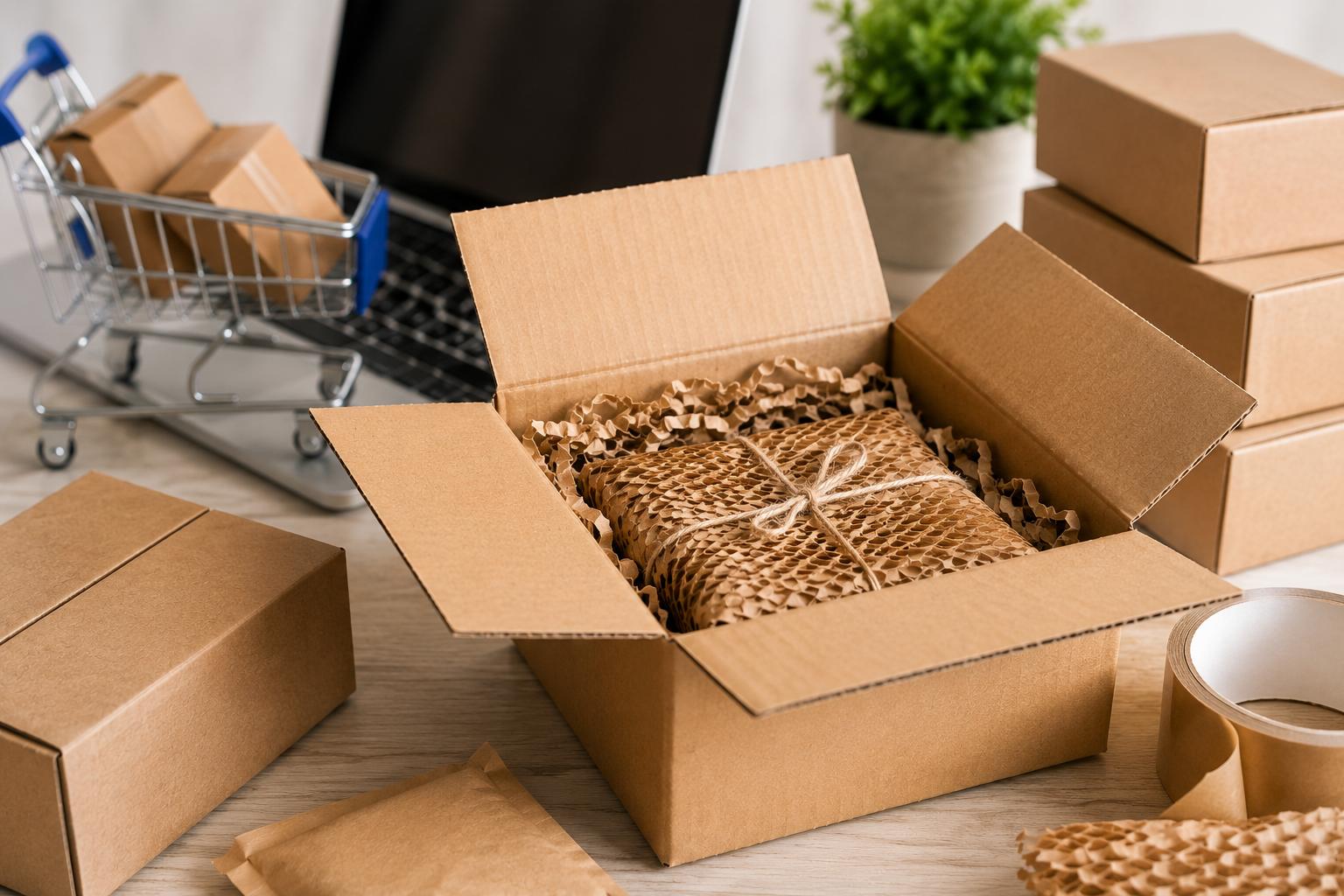
E-commerce has made shopping more convenient than ever, but it has also raised customer expectations. Buyers want their orders to arrive quickly, accurately, and in perfect condition. While online retailers often focus on product quality, shipping speed, and customer service, one important part of the customer experience is sometimes overlooked: packaging.
Packaging is more than a container for transporting a product. It protects items during handling and shipping, influences how customers perceive a brand, and can even affect whether a customer decides to keep or return an order. For e-commerce businesses, choosing the right packaging can therefore play an important role in reducing avoidable returns and improving customer satisfaction.
Why Packaging Matters in E-commerce
An online customer cannot physically examine a product before purchasing it. The first physical interaction they have with the brand often happens when the package arrives at their door.
If the package is damaged, crushed, poorly sealed, or excessively oversized, it can immediately create a negative impression. Even if the product inside is undamaged, poor packaging may make the customer question the quality and professionalism of the business.
More importantly, inadequate packaging can contribute to actual product damage. Products may experience drops, vibration, compression, moisture, and repeated handling while moving through the delivery network. A package that does not provide sufficient protection increases the risk of scratches, dents, broken components, leaks, or other damage.
For this reason, e-commerce businesses should consider packaging as part of their overall fulfillment strategy rather than treating it as an afterthought.
1. Choose Packaging Based on the Product
One packaging solution does not work equally well for every product.
A lightweight clothing item may need only a flexible mailer, while glassware, electronics, cosmetics, or other fragile products may require stronger boxes and internal protection. The size, weight, shape, and fragility of the product should all influence the packaging choice.
Using packaging designed around the product can reduce unnecessary movement during transportation. When an item fits securely inside its package, there is less opportunity for it to collide with the walls of the box or other items.
Businesses that ship different product categories should therefore evaluate their packaging requirements individually instead of using one oversized box for everything.
2. Reduce Product Movement Inside the Box
Excessive empty space is one of the common packaging problems in e-commerce.
When a product moves freely inside a box, it can experience repeated impacts during transportation. This becomes especially concerning for fragile or delicate products.
Internal inserts, dividers, cushioning materials, and properly sized packaging can help keep products in place. For example, an electronic accessory can be secured inside a fitted insert, while multiple products in the same order can be separated to prevent them from hitting each other.
The goal is not to fill every package with unnecessary material. Instead, businesses should create a packaging system that provides adequate protection while using materials efficiently.
3. Use the Right Box Size
Choosing the correct box size can benefit both product protection and shipping efficiency.
An oversized package creates additional empty space, which may require more filler to keep the product secure.For e-commerce businesses shipping lightweight products, custom mailer boxes can provide a practical packaging option that offers a better fit while supporting efficient shipping. It can also increase the overall package volume, potentially making storage and transportation less efficient.
On the other hand, packaging that is too small may place unnecessary pressure on the product or make it difficult to include protective materials.
Right-sized packaging creates a better balance. It provides enough room for the product and necessary protection without creating excessive empty space.
For businesses looking to improve their packaging strategy, exploring custom packaging solutions can help them select box dimensions and structures based on the specific requirements of their products.
4. Protect Products From Common Shipping Risks
Packages can pass through multiple stages before reaching the customer. They may be loaded onto trucks, moved through distribution centers, placed alongside heavier packages, and handled repeatedly by different people.
This means packaging should be designed with real-world transportation conditions in mind.
Depending on the product, businesses may need to consider:
- Impact and drops
- Compression from stacked packages
- Vibration during transportation
- Moisture and humidity
- Friction between products and packaging
- Pressure on delicate components
The appropriate level of protection will vary from product to product. A package for a lightweight item does not necessarily require the same construction as one designed for a fragile or heavy product.
5. Make Packaging Easy to Open
Protection is important, but convenience also matters.
Customers generally appreciate packaging that is secure without being unnecessarily difficult to open. Excessive tape, complicated layers, and large amounts of filler can make the unboxing process frustrating.
A well-designed package should protect the product while allowing customers to access it easily.
Simple features such as easy-open tabs, organized inserts, and appropriately sized boxes can create a smoother experience. When customers can open an order without struggling with excessive packaging, their overall perception of the brand can improve.
6. Use Packaging to Strengthen Brand Experience
Packaging can also contribute to brand recognition.
For e-commerce businesses, the package that arrives at the customer’s home can become an extension of the online shopping experience. Consistent colors, logos, printed designs, and professional packaging can make an order feel more intentional and memorable.
This is particularly valuable for small and growing businesses competing with larger brands.
A thoughtful package can communicate that the company cares about its products and customers. However, branding should complement functionality rather than replace it. Attractive packaging that fails to protect the product can ultimately create more problems than it solves.
7. Consider Sustainable Packaging Options
Sustainability is becoming increasingly relevant to purchasing decisions, particularly for brands that want to build a long-term relationship with environmentally conscious customers.
E-commerce businesses can look for ways to reduce unnecessary packaging materials while maintaining product protection. Right-sized boxes, recyclable materials, efficient inserts, and reduced filler can all contribute to a more responsible packaging approach.
Sustainable packaging should not mean sacrificing protection. The objective is to use materials efficiently and avoid unnecessary waste while still ensuring that products arrive safely.
8. Test Packaging Before Scaling
Before using a new packaging design for thousands of orders, businesses should test it.
A package may appear secure when sitting on a warehouse shelf but perform differently during transportation. Testing can help identify weaknesses before they lead to customer complaints and returns.
Businesses can evaluate:
- Whether the product moves inside the package
- How the box performs after controlled drops
- Whether the packaging withstands pressure
- Whether internal inserts remain secure
- Whether products show signs of friction or impact
- How the package looks after simulated transportation
The results can help businesses improve their packaging before introducing it on a larger scale.
How Better Packaging Can Reduce Returns
Not every product return can be prevented through packaging. Customers may change their minds, order the wrong size, or simply decide that a product is not right for them.
However, packaging can help reduce returns caused by preventable damage.
When products arrive safely and in good condition, businesses have fewer opportunities for complaints related to damaged items. This can reduce replacement shipments, refund requests, customer support workload, and the additional costs associated with reverse logistics.
More importantly, receiving an undamaged and professionally presented order can increase customer confidence in the business.
Final Thoughts
For e-commerce businesses, packaging is an important part of the complete customer journey. The right packaging can protect products during transportation, reduce unnecessary movement, improve presentation, and create a more convenient unboxing experience.
Businesses should focus on selecting packaging according to product requirements rather than simply choosing the cheapest or largest available option. Right-sized boxes, appropriate internal protection, durable materials, thoughtful branding, and practical testing can all contribute to better fulfillment outcomes.
When packaging is designed with both protection and customer experience in mind, it becomes more than a shipping container. It becomes an important part of delivering a successful e-commerce experience.
For more details click here.